
 Polski
  Deutsch
  Español
  Français
  Italiano
  Português
  Nederlands
  Svenska
  Українська
  Русский
 Automatic Recipe Ingredient Extractor: How AI is Transforming Your Kitchen in 2026
Discover how an automatic recipe ingredient extractor uses AI to instantly turn chaotic social media posts into organized, shoppable recipes. Cook more, type...

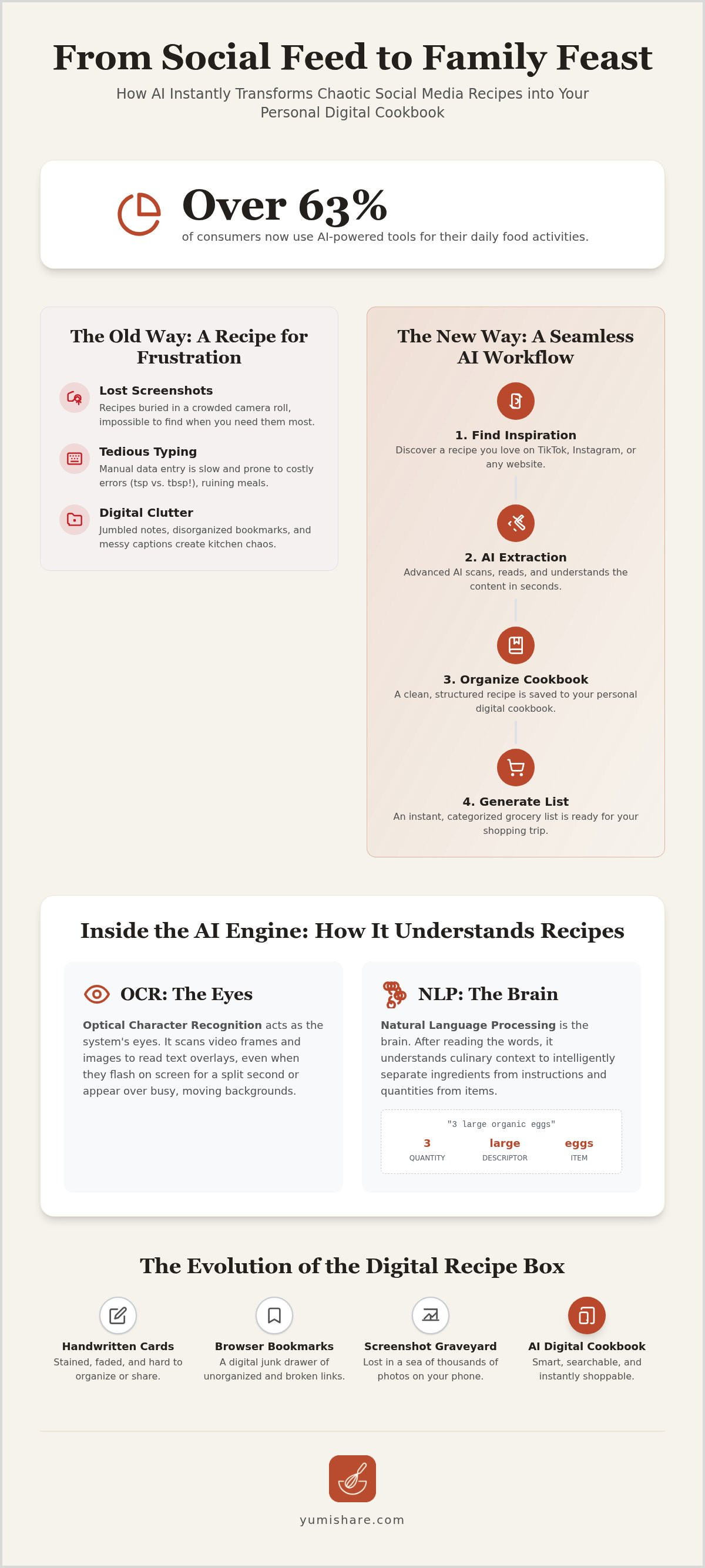
Over 63% of consumers now use AI-powered tools for their daily food activities. It's a massive shift toward digital mindfulness in the home. You've likely felt the frustration of finding a perfect meal on Instagram only to realize the recipe is a jumbled mess of emojis and text. Manual data entry is tedious. It's error-prone. Those screenshots you take usually just disappear into a crowded camera roll. Using an automatic recipe ingredient extractor is the modern solution to this digital clutter.
We agree that your kitchen should be a place of calm, not digital overwhelm. This article shows you how AI technology turns chaotic social media captions and videos into clean, shoppable digital recipes. You'll discover how to build a seamless digital cookbook and generate instant grocery lists from your favorite clips. We're breaking down the simple steps to reclaim your time. Let's look at how these tools help you spend more time at the stove and less time at the keyboard.
Key Takeaways
- Understand how AI parses unstructured data to eliminate manual copy-pasting from your kitchen routine.
- Use an automatic recipe ingredient extractor to turn chaotic social media captions into clean, shoppable digital recipes.
- Discover the mechanics of OCR and NLP technology that identify ingredients and instructions with precision.
- Master best practices for capturing non-standard measurements to ensure your digital recipes are always accurate.
- Build a clutter-free digital cookbook that generates instant grocery lists directly from your favorite video clips.
What is an Automatic Recipe Ingredient Extractor?
An automatic recipe ingredient extractor is a specialized software tool designed to identify and parse food-related data from unstructured sources. Think of it as a digital bridge. It takes the messy text found in social media captions, video overlays, and blog posts, then transforms it into a clean, organized format. By 2026, this technology has become the standard for home cooks who find inspiration on platforms like TikTok and Instagram. It replaces the old habit of manual typing with a single, efficient action. The primary goal is simple. It creates a structured, searchable database of ingredients that you can actually use. This tool facilitates a seamless workflow: scan the post, save the data, shop the list, and savor the meal.
This software doesn't just copy text. It understands context. Using advanced Natural Language Processing (NLP), the extractor identifies the difference between a quantity, a unit, and an item. It knows that "2 cloves of garlic, minced" belongs in an ingredient list, while "sauté until fragrant" belongs in the instructions. This intelligence turns a wall of text into a functional resource for your kitchen. It removes the digital noise and leaves only what's useful for the task at hand.
The Evolution of the Digital Recipe Box
Kitchen organization has come a long way. We've moved from stained handwritten cards to cluttered browser bookmarks and endless screenshots. Most of us have a "screenshot graveyard" in our phone galleries. These are recipes we intended to cook but can't find when standing in the grocery aisle. The shift to digitalize social media recipes solves this. It moves your inspiration from a static image to a dynamic, searchable file. You no longer have to scroll through thousands of photos to find that one pasta dish from last Tuesday. It's about moving from digital consumption to real-world execution.
Why Manual Entry is a Thing of the Past
Typing out recipes is a recipe for disaster. It's easy to mistake a "tsp" for a "tbsp" when you're rushing. These small errors ruin a meal. Manual entry also creates friction. Switching back and forth between a social app and a notes app is frustrating. It drains the mental energy you should be using for the actual cooking. Using an automatic recipe ingredient extractor preserves that energy. It handles the tedious data entry so you can focus on the tactile satisfaction of preparing food. In 2026, automation ensures your digital cookbook is accurate and accessible without the typing fatigue. It's the relief of simplification in a busy world.
How AI Extraction Technology Works
How does an automatic recipe ingredient extractor actually "see" a recipe? It isn't just magic. It's a precise combination of two core technologies working in tandem. First, the software must read the visual data. Second, it must interpret the meaning behind those words. By 2026, these systems have evolved to handle the chaotic environment of social media with high accuracy. This technology acts as a filter. It removes the digital noise and leaves you with the grounded, tactile satisfaction of a well-ordered kitchen.
The system identifies quantities, units, and food items simultaneously. It builds a three-dimensional map of every recipe line. For example, in the phrase "3 large organic eggs," the AI tags "3" as the quantity, "large" as the descriptor, and "eggs" as the core item. This level of granularity allows for features like serving scaling and smart category sorting in your grocery list. It transforms a flat caption into a dynamic data set. This precision is why 75.9% of UK consumers report being comfortable with AI recipe recommendations in 2026. The technology has finally earned our trust by being consistently accurate.
OCR: Reading the Unreadable
Optical Character Recognition (OCR) acts as the eyes of the system. It scans video frames in real-time to locate text overlays. This is harder than it sounds. TikTok creators often use vibrant, moving fonts against busy kitchen backgrounds. The AI must distinguish between a white text box and a white marble countertop. Early scraping tools struggled with this. Today's AI uses sophisticated depth-sensing to pull text from varying layers of a video. It captures measurements even when they only appear on screen for a split second. This ensures no detail is lost to the fast pace of modern content.
NLP: Understanding Culinary Context
Natural Language Processing (NLP) is the brain. Once OCR reads the words, NLP decides what they mean. It uses culinary logic to categorize data. It understands that "1 cup of flour" is an ingredient, while "Bake for 1 hour" is a step. This distinction is vital for creating a functional digital cookbook. The AI also identifies sub-ingredients. If a creator lists items for a "special sauce" separately, the system groups them logically. This intelligence is the foundation for extracting ingredients from TikTok videos without errors. It filters out the "fluff" and leaves you with a clean, actionable list.
Social media captions are notoriously messy. They are filled with emojis, slang, and non-standard formatting. A human knows that a "🔥 glug of oil" means a generous pour, but older software would get confused by the flame icon. Modern AI uses context clues to parse these human touches. It recognizes that "tsp" and "teaspoon" are identical. It handles the "Z-pattern" of user discovery by scanning, saving, and preparing the data for your grocery list. If you want to experience this streamlined workflow, a smart recipe saver app can bridge that gap instantly.
From TikTok to Table: Where to Use an Extractor
Recipe discovery has moved from the library to the palm of your hand. In 2026, social platforms are the primary source of culinary inspiration. However, these platforms aren't built for the kitchen environment. They are built for scrolling. Using an automatic recipe ingredient extractor bridges this gap by pulling data from varied sources. Whether it's a 15-second TikTok or a detailed YouTube description, the extractor standardizes the information. It removes the friction of digital discovery. You move from a digital spark to a physical result with zero manual effort.
Every platform presents a unique challenge for data extraction. Instagram Reels often hide ingredients in fast-paced captions or buried comments. TikTok creators frequently use text overlays that appear for only a split second. YouTube descriptions can be thousands of words long, filled with affiliate links and channel updates. Pinterest remains a visual maze of high-quality images linked to ad-heavy blogs. An automatic recipe ingredient extractor acts as a filter. It identifies the core data points regardless of the platform's layout. It strips away the clutter and leaves only what you need to cook.
The Instagram Recipe Keeper
Most home cooks have a "Saved" folder on Instagram filled with hundreds of recipes. The problem? It's a black hole. These folders lack searchability. You can't filter by "chicken" or "gluten-free" within the native app. An extractor changes this dynamic. Turn a Reel into a text-based list in under 5 seconds. Save it to your personal database. Sync your finds across all your devices instantly. This move from passive saving to active organization brings a sense of calm to your weekly meal planning. You stop searching and start cooking.
Managing Video-Based Inspiration
Cooking along with a video is notoriously difficult. Your hands are covered in flour. You're trying to pause and rewind a 60-second clip. It's a messy, frustrating process. Extraction technology solves this by generating a static, readable version of the video's content. This enables a cook mode for mobile recipes that keeps your screen on and your instructions clear. You also create a permanent record. Viral recipes often disappear if a creator deletes their account or the video is removed. Save the data once and keep the meal forever. It's digital mindfulness in action. You filter out the noise and keep the value.
Maximizing Accuracy and Efficiency
Efficiency isn't just about speed. It's about precision. While an automatic recipe ingredient extractor handles the heavy lifting, your input makes the result perfect. Think of the extraction process as a partnership. The AI scans the digital noise. You provide the final, mindful check. This ensures your dinner party isn't ruined by a misunderstood unit of measurement. By 2026, AI has become incredibly adept at parsing human language, but a quick glance still adds that necessary layer of domestic tranquility.
Non-standard measurements like "a glug of oil" or "a pinch of salt" used to confuse basic software. Modern extraction tools now recognize these culinary nuances. They translate vague terms into actionable items for your shopping list. If you prefer exact metrics, use the tool to toggle between imperial and metric units during the Save phase. This flexibility is essential for maintaining accuracy across different global cuisines. Research shows that while 75.9% of consumers trust AI recommendations, only 49.1% feel comfortable with fully automated shopping. A human-in-the-loop approach bridges this gap, giving you total control over your kitchen data.
Verification and Editing
A one-second review is your best practice. Check the quantities before you hit save. If a TikTok caption was blurry, use the edit feature to tweak the text instantly. Scaling recipes is another major benefit. If you're cooking for six people instead of two, let the AI recalculate the measurements for you. Add personal notes about substitutions, like using almond flour instead of wheat. This turns a viral clip into a permanent, personalized part of your digital cookbook.
The Path to the Grocery Store
The path to the grocery store starts with your phone. Once extracted, your ingredients should flow directly into your smart grocery lists. The software auto-categorizes items by aisle. Spices are grouped together. Produce stays with produce. This logical organization prevents you from wandering aimlessly through the shop. Combine ingredients from multiple recipes to see exactly how much garlic you need for the entire week. You reduce food waste by buying only what the AI extracted. It's a grounded, methodical way to manage your home. Ready to streamline your shopping? Get started with our Recipe Saver App to build your first smart list today.
YumiShare: Your All-in-One Extraction Solution
YumiShare is the premier tool for AI-driven recipe management in 2026. It serves as your personal automatic recipe ingredient extractor, bridging the gap between digital inspiration and real-world execution. The app is designed for the modern user who values both efficiency and domestic tranquility. It removes the friction of manual data entry. It clears the digital clutter. By using YumiShare, you transform a chaotic social media feed into a well-ordered home life. It's the relief of simplification you've been looking for. You move from digital consumption to the grounded, tactile satisfaction of a prepared meal.
The "Share to YumiShare" workflow is intuitive and brisk. It works perfectly on both iOS and Android devices. When you find a recipe on Instagram, TikTok, or YouTube, simply tap the share button and select YumiShare. The AI immediately begins its work. It follows a highly methodical "Z-pattern": Scan, Save, Shop, and Savor. This logical progression ensures that your discovery moment leads directly to a physical result. You aren't just saving a video; you're building a functional resource for your kitchen. It's an efficient problem-solver that values your time above all else.
The YumiShare Advantage
YumiShare is optimized specifically for the fast-paced world of social media platforms. It handles the unique formatting of TikTok overlays and Instagram captions with ease. The interface is clean and ad-free. It focuses entirely on the food, not the digital fluff that usually surrounds it. We provide continuous AI updates to stay ahead of changing social media formats. This ensures your extraction remains accurate as platforms evolve. You get a streamlined experience that acts as a filter for digital noise.
The hands-free Cook Mode is a standout feature for any home chef. Once the AI extracts the instructions, Cook Mode syncs them with the original video. You can follow along without touching your screen with messy hands. It keeps your phone clean and your focus on the ingredients. This feature turns a simple recipe saver into a savvy, organized companion in the kitchen. It's about more time spent cooking and less time typing. This is digital mindfulness in action, removing the noise and leaving only what is useful.
Start Your Digital Cookbook Today
Moving your existing "Saved" posts into YumiShare is the first step toward organization. Stop letting recipes die in your camera roll or Instagram folders. Import them today to create a permanent, searchable record. Setting up your first meal planning app workflow takes only minutes. You'll see the immediate benefit of having smart grocery lists generated from your favorite clips. Experience the magic of extraction for yourself. Try the free version of YumiShare and feel the grounded satisfaction of a well-ordered digital cookbook.
Embrace a Smarter Way to Cook
The movement toward digital mindfulness in the kitchen is already here. You've seen how AI bridges the gap between a fleeting TikTok clip and a successful dinner. By using an automatic recipe ingredient extractor, you eliminate the friction of manual data entry and the frustration of lost screenshots. You move from a state of digital overwhelm to a place of organized calm. It's about reclaiming your time and focusing on the tactile satisfaction of cooking. Your kitchen should be a sanctuary. It shouldn't be a place for endless scrolling and typing.
Building a permanent digital cookbook has never been simpler. You can now enjoy AI-powered extraction from all major social platforms and generate automated grocery lists in one tap. Experience the ease of hands-free Cook Mode for stress-free prep during every meal. It's time to let technology handle the logistics so you can focus on the flavor. Simplify your kitchen—Download YumiShare for free today. Start your journey toward a more manageable, mindful home life. You deserve a kitchen experience that feels like a helpful partner rather than another digital chore.
Frequently Asked Questions
How accurate is an automatic recipe ingredient extractor?
Accuracy has reached new heights in 2026. These tools identify quantities, units, and food items with near-perfect precision by analyzing the text context. Most minor errors only occur when video frames are extremely blurry or use highly stylized, overlapping fonts. You can trust the extraction for the vast majority of your daily cooking needs.
Does the ingredient extractor work on handwritten recipe photos?
Yes, the technology uses advanced OCR to read handwritten notes. It works best when the writing is legible and photographed in bright, even lighting. This feature allows you to digitalize old family recipe cards without the tedious task of manual typing. It acts as a bridge between your physical kitchen history and your digital future.
Can I extract ingredients from a video that has no written caption?
Extraction requires visual text to function effectively. If a video lacks a caption, the AI scans for text overlays or pop-ups within the video frames themselves. It doesn't currently "hear" ingredients spoken aloud without a separate transcription tool. Look for videos with on-screen lists or detailed descriptions for the most reliable results.
Is there a limit to how many recipes I can extract per day?
Your daily limit depends on your specific plan. Free users typically have a set number of monthly saves to keep the system fast and efficient for everyone. Premium subscribers enjoy unlimited extractions and advanced features. Check your account settings to see your current usage and explore upgrade options that fit your cooking habits.
Will the extractor work with metric and imperial units?
Yes, the automatic recipe ingredient extractor handles both metric and imperial units seamlessly. You can even toggle between grams and ounces during the saving process to match your local standards. This feature is essential for international cooking and ensures your measurements are always accurate. It removes the stress of manual unit conversions.
Can I share the extracted recipes with my family members?
Sharing is a core part of the YumiShare experience. You can send extracted recipes to family members via direct links or shared folders within the app. This keeps everyone on the same page for weekly meal planning and grocery runs. It's an efficient way to coordinate holiday prep and shared household meals.
What happens if the AI misses an ingredient during the extraction?
You have full control over the final list before it hits your digital cookbook. If the AI misses a detail due to a fast-moving video frame, use the edit feature to add it manually. This "human-in-the-loop" step ensures your recipes are 100% accurate. Quick verification is a best practice that maintains the integrity of your collection.
Does YumiShare support extraction from private Instagram accounts?
YumiShare respects platform privacy settings and user security. It cannot extract data from private Instagram accounts unless you are the owner or have authorized access to the content. For the most reliable experience, use public posts or content you have saved to your own profile. This ensures a secure and compliant extraction process for everyone.
FAQ
How accurate is an automatic recipe ingredient extractor?
Accuracy has reached new heights in 2026. These tools identify quantities, units, and food items with near-perfect precision by analyzing the text context. Most minor errors only occur when video frames are extremely blurry or use highly stylized, overlapping fonts. You can trust the extraction for the vast majority of your daily cooking needs.
Does the ingredient extractor work on handwritten recipe photos?
Yes, the technology uses advanced OCR to read handwritten notes. It works best when the writing is legible and photographed in bright, even lighting. This feature allows you to digitalize old family recipe cards without the tedious task of manual typing. It acts as a bridge between your physical kitchen history and your digital future.
Can I extract ingredients from a video that has no written caption?
Extraction requires visual text to function effectively. If a video lacks a caption, the AI scans for text overlays or pop-ups within the video frames themselves. It doesn't currently "hear" ingredients spoken aloud without a separate transcription tool. Look for videos with on-screen lists or detailed descriptions for the most reliable results.
Is there a limit to how many recipes I can extract per day?
Your daily limit depends on your specific plan. Free users typically have a set number of monthly saves to keep the system fast and efficient for everyone. Premium subscribers enjoy unlimited extractions and advanced features. Check your account settings to see your current usage and explore upgrade options that fit your cooking habits.
Will the extractor work with metric and imperial units?
Yes, the automatic recipe ingredient extractor handles both metric and imperial units seamlessly. You can even toggle between grams and ounces during the saving process to match your local standards. This feature is essential for international cooking and ensures your measurements are always accurate. It removes the stress of manual unit conversions.
Can I share the extracted recipes with my family members?
Sharing is a core part of the YumiShare experience. You can send extracted recipes to family members via direct links or shared folders within the app. This keeps everyone on the same page for weekly meal planning and grocery runs. It's an efficient way to coordinate holiday prep and shared household meals.
What happens if the AI misses an ingredient during the extraction?
You have full control over the final list before it hits your digital cookbook. If the AI misses a detail due to a fast-moving video frame, use the edit feature to add it manually. This "human-in-the-loop" step ensures your recipes are 100% accurate. Quick verification is a best practice that maintains the integrity of your collection.
Does YumiShare support extraction from private Instagram accounts?
YumiShare respects platform privacy settings and user security. It cannot extract data from private Instagram accounts unless you are the owner or have authorized access to the content. For the most reliable experience, use public posts or content you have saved to your own profile. This ensures a secure and compliant extraction process for everyone.