
 Polski
  Deutsch
  Español
  Français
  Italiano
  Português
  Nederlands
  Svenska
  Українська
  Русский
 Meal Prepping: 2026 Guide to Stress-Free Kitchen Success
Learn how to organize recipes for meal prep and turn your saved TikToks into stress-free meals. Our 2026 guide helps you save money and end kitchen chaos.

Recent data shows that 93% of Americans expect to cook at home more this year than ever before. The economy and personal health goals drive this shift, yet the transition isn't always smooth. Most of us don't lack ideas. We have mountains of saved TikToks, Instagram reels, and Pinterest pins that never actually make it to the plate. Learning how to organize recipes for meal prep is the vital link between that digital inspiration and a finished meal. Digital overwhelm is real. You save a "15-minute dinner" only to lose it in a sea of bookmarks when the 6:00 PM hunger hits.
We all want the tranquility of a well-ordered home life. You deserve a Sunday routine that feels like a relief rather than a chore. This guide shows you how to bridge the gap between your screen and your stove. We'll explore how to transform scattered saves into a streamlined digital cookbook that actually works. You'll learn to automate your grocery lists and eliminate decision fatigue for good. Expect a clear path toward lower grocery bills and a stress-free week of delicious, home-cooked meals.
Key Takeaways
- Redefine meal prepping as a flexible, modern bridge between digital inspiration and your daily reality.
- Master how to organize recipes for meal prep by centralizing your social media saves into one searchable digital library.
- Choose between batch cooking full meals for grab-and-go speed or component prepping for maximum flavor variety.
- Implement a five-step workflow that starts with a pantry audit to cut grocery costs and eliminate mid-week decision fatigue.
- Leverage AI tools to instantly convert viral cooking videos into smart grocery lists and hands-free cooking guides.
What is Meal Prepping? (And Why You Need It in 2026)
Meal prepping is the strategic bridge between digital inspiration and a finished meal. It’s the process of setting aside time to plan, shop, and prepare ingredients or full dishes before the week begins. While many people think of it as just packing containers, What is Meal Prepping? actually refers to a broader system of organization. It turns the frantic energy of "what’s for dinner" into a calm, repeatable routine. In 2026, this practice has evolved. We’ve moved away from rigid, identical meals toward a flexible workflow that respects your time and your cravings.
Traditional batch cooking often felt like a marathon. You spent your entire Sunday in a hot kitchen preparing seven identical portions of chicken and rice. Modern prepping is different. It’s about agility and variety. Mastering how to organize recipes for meal prep allows you to move from passive scrolling to active cooking without the burnout. Success rests on three core pillars: Saving, Planning, and Prepping. You capture the digital spark, map out your week, and then execute the physical prep. This shift from paper binders to digital recipe managers ensures your favorite meals are always a tap away.
The Benefits: More Than Just Saving Money
- Reduce decision fatigue. Eliminate the mental load of choosing a meal at 6:00 PM. Decide once on Sunday and enjoy the relief all week.
- Minimize food waste. Shop with a precise, recipe-based list. You only buy what you’ll actually use, keeping your fridge clean and your conscience clear.
- Enjoy better nutrition. Control your ingredients and portion sizes. When a healthy meal is already ready, you’re less likely to reach for high-sodium takeout.
Who is Meal Prepping For?
Meal prepping isn't just for fitness influencers; it’s a tool for anyone living a high-speed life. Busy professionals use it to secure grab-and-go healthy lunches that keep them fueled through back-to-back meetings. Families find it essential for streamlining chaotic weeknight dinners, ensuring everyone eats well despite soccer practice or late shifts. It’s also the ultimate strategy for budget-conscious cooks. By learning how to organize recipes for meal prep, you maximize your grocery spend and ensure that expensive organic produce actually ends up on your plate instead of in the compost bin.
The Social-First Planning Method: Finding and Saving Recipes
In 2026, kitchen inspiration doesn't come from dusty binders. It comes from a 15-second TikTok or a vibrant Instagram reel. But saving a post is only half the battle. Most people end up with a "Screenshot Graveyard," a collection of thousands of photos that are impossible to search. This digital clutter is the primary reason people fail at meal prep. You need a centralized digital recipe box to bridge the gap between discovery and dinner. Understanding how to organize recipes for meal prep starts with moving those social finds into a single, functional space.
Manual typing is the enemy of consistency. If you have to type out every ingredient from a video, you won't do it. According to a guide from Harvard, having a plan is essential for maintaining a healthy diet and managing weight. However, that plan shouldn't feel like a data entry job. Modern technology now does the heavy lifting for you, pulling text from video descriptions or comments instantly. This removes the friction that usually stops a meal prep habit before it even begins.
Converting Reels and TikToks into Text
Stop the pause and rewind cycle. Watching a cooking video five times just to write down measurements is a waste of your mental energy. Use modern tools to extract the data instead. AI can analyze a video link and generate a structured list of ingredients and instructions in seconds. It essentially translates the visual energy of a viral clip into a practical, text-based recipe you can actually use in the kitchen. This transformation is the key to turning a digital spark into a physical result.
Organizing Your Digital Cookbook
Structure your library for speed. Once you've saved your recipes, group them by meal type or total prep time. This makes your Sunday planning session much faster. When you know how to organize recipes for meal prep effectively, you can build a menu in minutes rather than hours. Try these categorization tips:
- Categorize by utility: Group breakfasts, lunches, and dinners separately for quick browsing.
- Tag by effort: Label recipes as "Prep-Friendly" for workdays or "Weekend Only" for when you have more time.
- Search by ingredient: Use keywords to find recipes based on what you already have in your pantry.
Finding the best app for saved recipes is about finding a tool that understands this social-first workflow. It should feel like a partner that removes the noise and leaves only what is useful. If you're tired of scrolling through your camera roll for that one pasta dish, try using a Recipe Saver App to keep everything in one place. This simple change turns a chaotic feed into a curated, actionable menu.
Choosing Your Prep Style: Full Meals vs. Component Prep
Identify your lifestyle before you pick up a chef's knife. The right prepping style acts as a filter for your week, removing the friction of daily cooking and reclaiming your mental space. It isn’t just about the food; it’s about the relief of knowing exactly what happens next. Mastering how to organize recipes for meal prep means choosing the method that matches your energy levels and your palate's need for variety.
Full Meal Prepping: The Sunday Classic
Cook once, eat all week. This classic approach involves preparing entire recipes and portioning them into individual containers. It’s the gold standard for busy professionals who need grab-and-go healthy lunches. One-pot meals, stews, and casseroles work best here because they often taste better after the flavors meld in the fridge. The primary benefit is zero effort during the week. You simply grab a container and go. However, the downside is repetition. If you hate eating the same chili four days in a row, this might lead to fridge fatigue and a last-minute takeout order. Use this style for meals where consistency is a comfort rather than a chore.
Component Prepping: The Lazy Genius Way
Focus on building blocks instead of finished dishes. You roast a tray of sweet potatoes, boil a pot of quinoa, and grill three chicken breasts. This method is the efficient way to stay flexible. It feels fresh because you assemble the meal right before eating. It only takes five to ten minutes to toss a bowl together, but you get a different flavor profile every night. Imagine a Taco Zone in your fridge with chopped peppers, seasoned meat, and washed greens. You can make a salad Monday, a wrap Tuesday, and a bowl Wednesday. It’s the perfect solution for those who want to avoid the "leftover" taste while still saving time.
Try Buffet Style prepping for the ultimate middle ground. This involves preparing large batches of proteins and veggies that the whole family can mix and match. It’s particularly effective for households with picky eaters or diverse dietary needs. Decide which style fits your current reality by looking at your calendar. If your Tuesday is packed with meetings, a full meal is your best friend. If your Thursday is more relaxed, component assembly keeps things interesting. Learning how to organize recipes for meal prep effectively allows you to toggle between these styles as your schedule shifts.
- Choose Full Meals if: You have zero time to cook on weeknights and value speed above all else.
- Choose Component Prep if: You crave variety and have 10 minutes to spare for assembly.
- Choose Buffet Style if: You’re feeding a household with diverse tastes and need a "choose your own adventure" dinner.
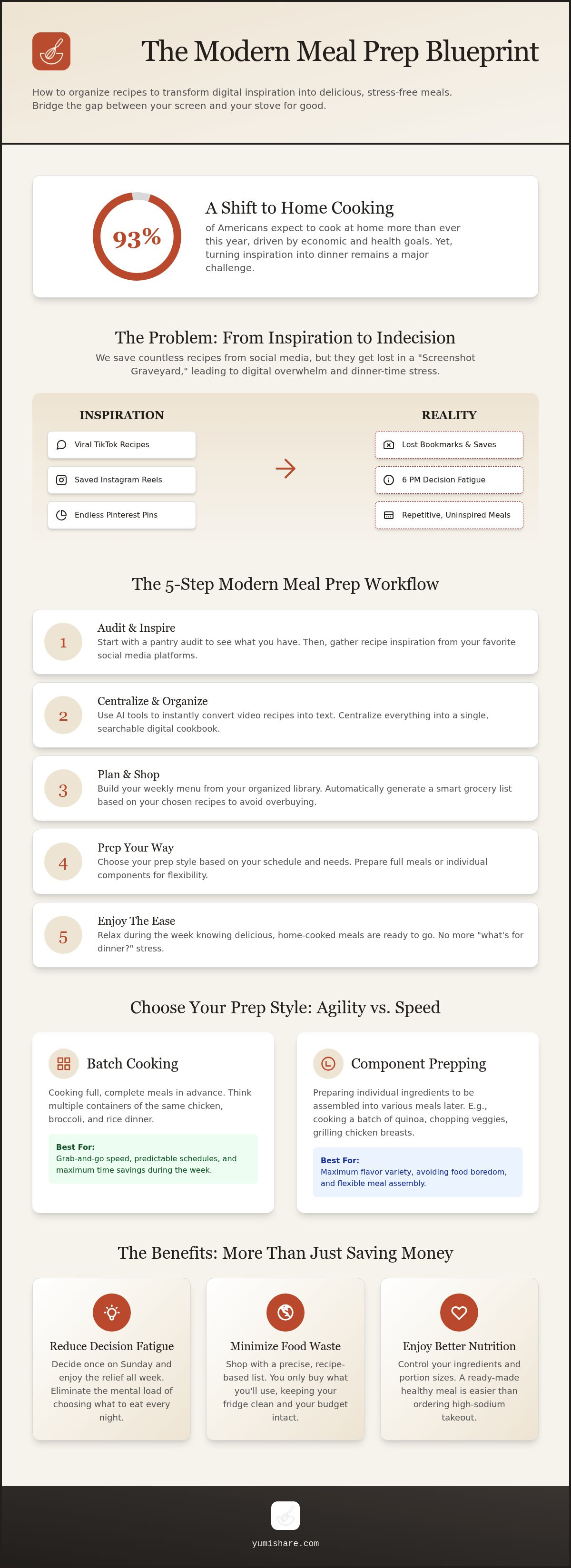
The 5-Step Meal Prep Workflow for Beginners
Success in the kitchen starts with a system. You don't need to be a professional chef to master your week. You just need a repeatable sequence that removes the guesswork. This workflow transforms your digital saves into tangible meals while protecting your time and budget. Mastering how to organize recipes for meal prep is about more than just digital folders; it's about the movement from your screen to your stove.
Step 1: Audit your pantry and fridge. Look at what you already have. Check the back of the shelves for grains, spices, or canned goods. This simple check prevents you from buying a second jar of cumin or another bag of rice. It’s the easiest way to lower your grocery bill before you even leave the house.
Step 2: Plan your menu. Select three to five prep-friendly recipes. Don't overcomplicate it. Pick dishes that share similar ingredients to keep your shopping list lean. This stage is the core of how to organize recipes for meal prep effectively. You decide which "saved" ideas actually make the cut for the week ahead.
Step 3: Generate a smart grocery list. Convert your chosen recipes into a single, organized shopping list. If you do this manually, you risk missing the one ingredient that makes the dish work. Automation is your friend here. It ensures you have exactly what you need without the mental load of double-checking.
Step 4: Execute the Big Prep. Set a timer for 90 minutes. Wash, chop, roast, and portion. Focus on high-impact tasks like cooking grains or roasting a large batch of vegetables. Doing the heavy lifting now saves you hours of cleaning during the busy weeknights.
Step 5: Store and label everything. Place everything in clear containers. Label them with the name and date. Knowing exactly what's inside prevents the "mystery container" problem on Wednesday night. It makes grabbing a healthy meal as easy as opening the fridge.
Smart Grocery Shopping
Efficiency in the store is just as important as efficiency in the kitchen. Sort your list by aisle to minimize backtracking. This prevents you from wandering aimlessly and falling for marketing traps. Use a meal planner with grocery list to automate this sorting process instantly. Follow the No-Buy rule: if it isn't on the list, it doesn't go in the cart. This discipline keeps your budget in check and your pantry organized.
Storage and Food Safety
Invest in high-quality, airtight glass or BPA-free plastic containers. Good seals keep your food fresh and prevent leaks in your bag. Follow the 4-day rule. Most prepped food stays fresh for 96 hours in a cold fridge. If you don't plan to eat a portion within that window, move it to the freezer. Proper labeling is the final step. Use a piece of masking tape and a marker to write the prep date. This simple habit ensures you always eat the freshest food first. Ready to simplify your routine? Start using a Meal Planner today to turn your digital inspiration into a stress-free reality.
Streamlining Your Kitchen with YumiShare
YumiShare acts as your savvy, organized companion in the kitchen. It bridges the gap between that viral pasta video and your dinner plate. Most people struggle with how to organize recipes for meal prep because the process feels fragmented. You save a link, write a list, and then lose your place while cooking. YumiShare replaces this chaos with a single, streamlined workflow. It acts as a filter that removes the noise. It leaves you with only what is useful for your week. Domestic tranquility starts with a system that actually works. It transforms a cluttered digital existence into a well-ordered home life. You no longer have to hunt for links or decipher messy notes. Everything is synchronized, automated, and ready for action.
The Smart Grocery List is more than just a checklist. It’s an automated inventory manager. It categorizes items by aisle and merges identical ingredients from different dishes. This precision eliminates wasted grocery spend. You buy exactly what you need for your specific plan. It’s the ultimate expression of digital mindfulness in the home. By centralizing your library, you learn how to organize recipes for meal prep in a way that scales with your life. You save time, reduce waste, and reclaim your mental space on busy weeknights.
From TikTok Reel to Grocery List in Seconds
Stop the screenshot cycle. Use the Social Import feature to capture recipes from TikTok, Instagram, and Pinterest instantly. AI handles the heavy lifting of extraction. It pulls precise ingredient quantities and instructions directly from the video description. This data then flows into your Smart Grocery List automatically. The app merges ingredients from multiple recipes, ensuring you don't buy extra supplies you already have. If you’re looking for a recipe keeper alternative, this is the tool that moves at the speed of your social feed. It turns a digital spark into a physical result without the friction of manual typing.
Hands-Free Cooking: The Ultimate Kitchen Hack
Execution is where the plan meets the stove. Cook Mode is the solution to flour-covered thumbs and messy phone screens. It offers a hands-free interface that moves through steps as you work. For visual learners, it syncs instructions with the original social video. You get the clarity of text with the helpful guidance of the creator. This feature turns a potentially stressful evening into a moment of domestic tranquility. It values your time and mental space above all else. Download YumiShare to start your first meal plan today and experience the relief of a truly organized kitchen. It’s the final piece of the puzzle for stress-free kitchen success in 2026.
Reclaim Your Time and Kitchen Calm
Meal prepping in 2026 isn't about rigid rules or boring leftovers. It's about building a bridge between the viral inspiration on your feed and the reality of your weeknight dinner. You've learned how to audit your pantry, choose a prep style that matches your energy, and execute a workflow that actually sticks. Most importantly, you now know how to organize recipes for meal prep by moving beyond messy screenshots and into a centralized digital library.
YumiShare simplifies this entire transformation. With AI-powered extraction, you can save recipes from Instagram, TikTok, and Pinterest in seconds. Your plan automatically generates smart, aisle-sorted grocery lists that cut down store time and eliminate wasted spend. It's time to move from passive scrolling to active cooking with a tool that values your mental space above all else. Start your stress-free meal prep journey with YumiShare and enjoy the grounded, tactile satisfaction of a well-ordered home life. You've got this.
Frequently Asked Questions
How long does meal prepped food stay fresh in the fridge?
Most prepped meals stay fresh for three to four days when stored in an airtight container at or below 40°F. This 96-hour window applies to cooked proteins like chicken, turkey, and ground beef. Hearty grains and roasted vegetables often hold their texture well throughout this entire period. If you don't plan to eat a portion within four days, move it to the freezer immediately to maintain quality.
Can I meal prep if I have a small kitchen or limited equipment?
You don't need a professional chef's kitchen to succeed. Focus on one-pot recipes or sheet-pan meals to minimize the footprint on your counters and reduce cleanup. Use vertical space for storage and clean as you go to maintain order in tight spaces. Learning how to organize recipes for meal prep digitally also helps. It removes the need for bulky physical cookbooks or scattered paper notes on your limited counter space.
What are the best containers for meal prepping?
Invest in airtight glass containers for the best long-term results. Glass is non-porous, meaning it won't absorb odors or stains from strong sauces; it’s also safer for microwave reheating. If you’re often on the move, high-quality BPA-free plastic containers offer a lightweight, shatterproof alternative for your bag. Look for sets that stack neatly to save shelf space. Ensure every lid has a strong silicone seal to prevent leaks.
How do I avoid getting bored with the same meals every day?
Combat flavor fatigue by prioritizing component prepping over identical batch meals. Instead of four identical bowls, prep versatile building blocks like roasted chicken, quinoa, and varied greens. Change your experience by using different sauces or spices each day. A spicy peanut dressing on Monday feels entirely different from a lemon-tahini drizzle on Tuesday. This flexibility keeps your palate excited while maintaining the convenience of a pre-planned, organized menu.
Is meal prepping actually cheaper than cooking every night?
Meal prepping is significantly cheaper because it eliminates impulse buys and reduces food waste. A 2026 survey revealed that 85% of Americans cite the economy as a major factor for cooking more at home. By following a specific plan, you only buy what you need. You stop paying the convenience tax on last-minute takeout. Knowing how to organize recipes for meal prep ensures that the expensive ingredients you buy actually end up in a dish.
Can I meal prep for a whole family or just for one person?
You can absolutely prep for a large household. The Buffet Style method works best for families with different tastes or dietary needs. Prep large quantities of shared bases like rice or pasta, then offer various toppings and proteins in separate containers. This allows everyone to customize their plate while you only cook once. It streamlines chaotic weeknights and ensures the whole family eats a nutritious meal without the usual evening stress.
What is the difference between meal prep and food prep?
Meal prep involves preparing entire dishes that are ready to heat and eat. It’s the ultimate time-saver for busy mornings or grab-and-go office lunches. Food prep is the act of preparing individual ingredients, such as washing greens, chopping onions, or cooking a batch of beans. Most successful routines use a blend of both. You might prep full breakfasts for speed but use food prep for dinners to keep your evening meals feeling fresh.
FAQ
Who is Meal Prepping For?
Meal prepping isn't just for fitness influencers; it’s a tool for anyone living a high-speed life. Busy professionals use it to secure grab-and-go healthy lunches that keep them fueled through back-to-back meetings. Families find it essential for streamlining chaotic weeknight dinners, ensuring everyone eats well despite soccer practice or late shifts. It’s also the ultimate strategy for budget-conscious cooks. By learning how to organize recipes for meal prep, you maximize your grocery spend and ensure that expensive organic produce actually ends up on your plate instead of in the compost bin. In 2026, kitchen inspiration doesn't come from dusty binders. It comes from a 15-second TikTok or a vibrant Instagram reel. But saving a post is only half the battle. Most people end up with a "Screenshot Graveyard," a collection of thousands of photos that are impossible to search. This digital clutter is the primary reason people fail at meal prep. You need a centralized digital recipe box to bridge the gap between discovery and dinner. Understanding how to organize recipes for meal prep starts with moving those social finds into a single, functional space. Manual typing is the enemy of consistency. If you have to type out every ingredient from a video, you won't do it. According to a guide from Harvard, having a plan is essential for maintaining a healthy diet and managing weight. However, that plan shouldn't feel like a data entry job. Modern technology now does the heavy lifting for you, pulling text from video descriptions or comments instantly. This removes the friction that usually stops a meal prep habit before it even begins.
How long does meal prepped food stay fresh in the fridge?
Most prepped meals stay fresh for three to four days when stored in an airtight container at or below 40°F. This 96-hour window applies to cooked proteins like chicken, turkey, and ground beef. Hearty grains and roasted vegetables often hold their texture well throughout this entire period. If you don't plan to eat a portion within four days, move it to the freezer immediately to maintain quality.
Can I meal prep if I have a small kitchen or limited equipment?
You don't need a professional chef's kitchen to succeed. Focus on one-pot recipes or sheet-pan meals to minimize the footprint on your counters and reduce cleanup. Use vertical space for storage and clean as you go to maintain order in tight spaces. Learning how to organize recipes for meal prep digitally also helps. It removes the need for bulky physical cookbooks or scattered paper notes on your limited counter space.
What are the best containers for meal prepping?
Invest in airtight glass containers for the best long-term results. Glass is non-porous, meaning it won't absorb odors or stains from strong sauces; it’s also safer for microwave reheating. If you’re often on the move, high-quality BPA-free plastic containers offer a lightweight, shatterproof alternative for your bag. Look for sets that stack neatly to save shelf space. Ensure every lid has a strong silicone seal to prevent leaks.
How do I avoid getting bored with the same meals every day?
Combat flavor fatigue by prioritizing component prepping over identical batch meals. Instead of four identical bowls, prep versatile building blocks like roasted chicken, quinoa, and varied greens. Change your experience by using different sauces or spices each day. A spicy peanut dressing on Monday feels entirely different from a lemon-tahini drizzle on Tuesday. This flexibility keeps your palate excited while maintaining the convenience of a pre-planned, organized menu.
Is meal prepping actually cheaper than cooking every night?
Meal prepping is significantly cheaper because it eliminates impulse buys and reduces food waste. A 2026 survey revealed that 85% of Americans cite the economy as a major factor for cooking more at home. By following a specific plan, you only buy what you need. You stop paying the convenience tax on last-minute takeout. Knowing how to organize recipes for meal prep ensures that the expensive ingredients you buy actually end up in a dish.
Can I meal prep for a whole family or just for one person?
You can absolutely prep for a large household. The Buffet Style method works best for families with different tastes or dietary needs. Prep large quantities of shared bases like rice or pasta, then offer various toppings and proteins in separate containers. This allows everyone to customize their plate while you only cook once. It streamlines chaotic weeknights and ensures the whole family eats a nutritious meal without the usual evening stress.
What is the difference between meal prep and food prep?
Meal prep involves preparing entire dishes that are ready to heat and eat. It’s the ultimate time-saver for busy mornings or grab-and-go office lunches. Food prep is the act of preparing individual ingredients, such as washing greens, chopping onions, or cooking a batch of beans. Most successful routines use a blend of both. You might prep full breakfasts for speed but use food prep for dinners to keep your evening meals feeling fresh.